
How to Compare OSHC Providers as a Filipino Student in Australia
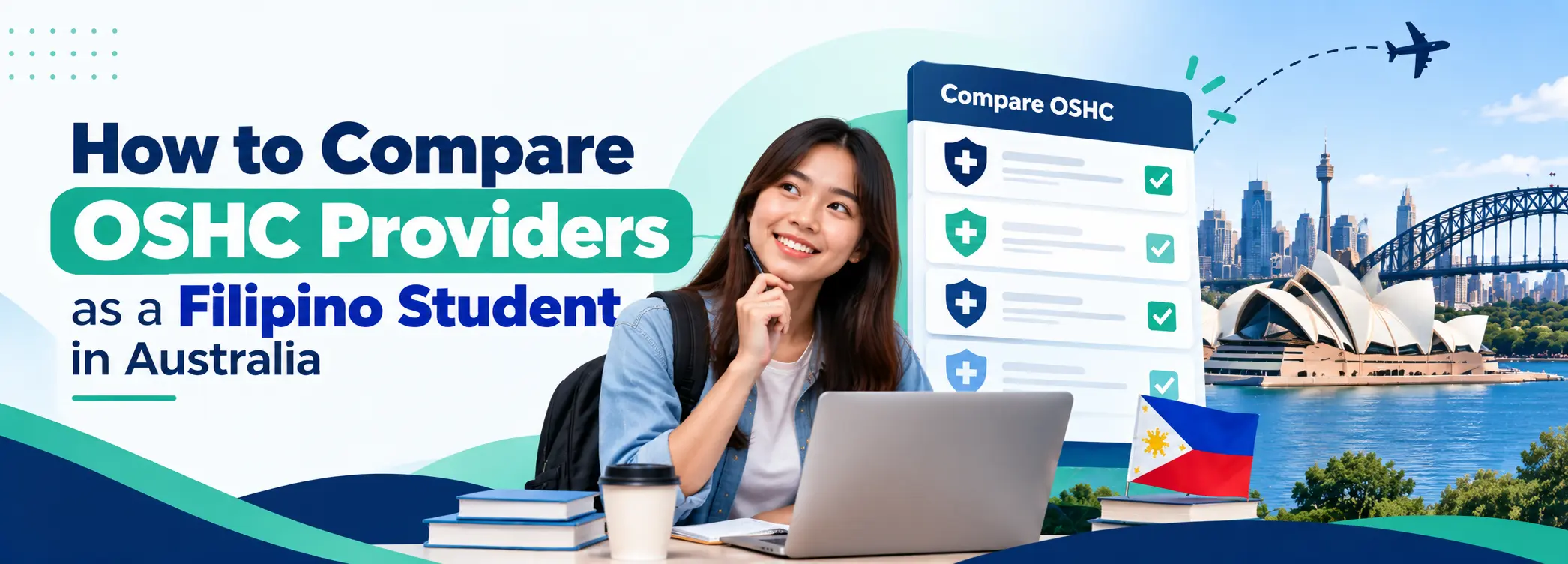
Choosing the right Overseas Student Health Cover (OSHC) is an important step for Filipino students planning to study in Australia. With several insurance providers offering different policies, comparing your options can help you understand what you are paying for and which policy suits your healthcare needs.
While some students focus mainly on the price, others prioritise hospital benefits, convenient claims, digital services or access to healthcare providers. The right choice depends on your individual circumstances, study plans and budget.
This guide explains how Filipino students can compare OSHC providers in Australia, understand policy differences and make a more informed decision before purchasing health insurance.
What Is OSHC and Why Do Filipino Students Need It?
Overseas Student Health Cover (OSHC) is health insurance designed for international students studying in Australia. Most Student Visa (Subclass 500) holders must maintain appropriate OSHC unless they qualify for an exemption.
OSHC helps cover eligible medical and hospital expenses under the terms of the selected policy. However, benefits, limits, exclusions and out-of-pocket costs can differ between policies.
For Filipino students preparing to move to Australia, comparing OSHC before departure can make it easier to understand healthcare arrangements and plan for potential medical expenses.
Your policy should also cover the required period of your stay. Check the current requirements on the Australian Department of Home Affairs website.
Which OSHC Providers Can Filipino Students Compare?
Several established insurers offer OSHC products in Australia. Depending on current availability, students may compare providers such as:
These providers should not be treated as identical. Their premiums, policy conditions, digital services, claims procedures and additional benefits may differ.
Rather than choosing a provider based only on its name or reputation, review the specific policy available for your circumstances.
7 Factors to Compare Before Choosing an OSHC Provider
1. Compare the Total Premium
Price is an important consideration for students managing tuition fees, accommodation, transport and everyday living expenses.
However, the lowest-priced policy is not automatically the best option. Compare quotes for the same cover type and policy period so that the prices are meaningful.
Check the following before purchasing:
- Total premium for the required policy period
- Policy start and end dates
- Whether the quote is for Single, Couple or Family cover
- Any applicable excess or patient contribution
- Whether the displayed price includes all required costs
Practical tip: Compare the total cost for your intended period of study rather than relying only on an advertised weekly or monthly price.
2. Check GP and Specialist Benefits
General practitioners (GPs) are often the first point of contact when you need medical advice in Australia.
When comparing policies, check how benefits are paid for eligible GP consultations and specialist appointments. Specialist services may require a referral, and benefits can depend on the treatment and applicable policy conditions.
Ask these questions:
- What benefit is payable for a standard GP consultation?
- Are specialist consultations covered, and under what conditions?
- Could I need to pay the difference between the provider's fee and my insurance benefit?
- Are there any applicable waiting periods?
Understanding these details helps you estimate potential out-of-pocket expenses instead of assuming every appointment will be fully covered.
3. Review Hospital and Emergency Benefits
Hospital treatment can be expensive without suitable insurance. Compare the hospital benefits included in each OSHC policy and understand how treatment at public and private hospitals is handled.
Review:
- Eligible inpatient hospital treatment
- Emergency treatment and relevant hospital services
- Ambulance benefits and applicable conditions
- Any excess, co-payment or patient contribution
- Hospital arrangements that could affect your out-of-pocket expenses
Do not assume that every hospital or treatment will be covered in full. Read the policy documents and confirm any uncertain details with the insurer before receiving planned treatment.
4. Understand Prescription Medicine Limits
Prescription medicines are another important consideration when comparing OSHC providers.
OSHC policies generally provide limited benefits for eligible prescription medicines, subject to applicable rules, limits and patient contributions. Some medicines may involve significant out-of-pocket costs.
Before buying a policy, check:
- Which prescription medicines are eligible
- The benefit payable for eligible medicines
- Any limits per prescription or policy period
- Whether you must pay a patient contribution
- Any exclusions or restrictions that apply
If you regularly require medication, review the policy conditions carefully and ask the insurer how your specific circumstances would be treated.
5. Compare Waiting Periods, Exclusions and Limits
A policy can include benefits without covering every treatment immediately or in every situation.
Read the Product Disclosure Statement (PDS) or equivalent policy documentation to understand:
- Waiting periods for relevant treatments
- Pre-existing condition rules
- Exclusions and benefit limits
- Conditions for accessing particular services
- Any additional costs you may have to pay
For example, dental treatment, optical services and physiotherapy are not automatically included in standard OSHC benefits. Check the actual policy wording rather than assuming these services are covered.
Understanding exclusions before buying can help you avoid unexpected bills later.
6. Check the Claims Process and Digital Services
Managing insurance from another country can feel unfamiliar, especially during your first few months in Australia. A provider's claims process and online services can make a difference to your day-to-day experience.
Compare whether each insurer offers:
- Online claims submission
- A member portal or mobile app
- Digital access to policy documents
- Clear explanations of claim status and benefits
- Accessible customer support
Also check whether direct billing is available at healthcare providers you may use. Availability can depend on the insurer, clinic and type of service, so confirm the details rather than assuming every clinic offers it.
7. Consider Customer Support
Clear communication is valuable when you are trying to understand a medical bill, submit a claim or confirm whether a treatment is covered.
Before selecting a provider, review its available contact channels, support hours and online help resources. You can also look for recent customer feedback, paying attention to recurring experiences rather than relying on a single review.
If you prefer assistance in a particular language, check directly with the insurer to see whether that support is available.
How to Compare OSHC Providers Side by Side
Use the following checklist when reviewing quotes from different insurers.
| Comparison factor | What to check |
| Premium | Total cost for the same policy period |
| GP benefits | Benefit payable for eligible consultations |
| Specialist benefits | Conditions, referral requirements and limits |
| Hospital treatment | Eligible services and possible out-of-pocket costs |
| Ambulance | Eligibility and applicable conditions |
| Prescription medicines | Limits and patient contributions |
| Waiting periods | Applicable waiting periods and exclusions |
| Claims | Online process and claim information |
| Digital services | App, portal and access to policy documents |
| Policy dates | Correct start date and end date |
The most suitable policy is the one that meets your requirements and provides an appropriate balance of cost, benefits and convenience.
Should You Choose the OSHC Provider Recommended by Your University?
Some Australian universities or education agents arrange OSHC through a preferred provider. This can be convenient because the insurance may be organised alongside your enrolment arrangements.
However, you can generally arrange your own OSHC with an approved provider, provided your policy meets the applicable requirements.
Before accepting an arranged policy, check:
- Which insurer is providing the cover?
- What is the total premium?
- Do the policy dates match your expected arrival and visa requirements?
- What benefits and exclusions apply?
- Can you find another suitable policy at a different price?
Compare equivalent policies before deciding. Convenience matters, but it should not prevent you from understanding your available options.
How Filipino Students Can Compare OSHC with Budget Policy
Budget Policy helps international students compare available OSHC options in one place rather than researching each insurer separately.
You can start by visiting the OSHC comparison page and reviewing the available options.
A simple approach is to:
- Enter your details: Provide the information needed to obtain a relevant quote.
- Review available providers: Compare the options displayed for your circumstances.
- Check the policy benefits: Review premiums, cover details and relevant conditions.
- Confirm the policy dates: Make sure the cover aligns with your requirements.
- Read the policy documents: Check exclusions, limits and potential out-of-pocket costs before purchasing.
You can also read our guide to OSHC for Filipino students for additional background on choosing student health cover.
The goal is not simply to select the cheapest quote. It is to understand the differences between available policies and choose cover that suits your circumstances.
Common Mistakes to Avoid When Comparing OSHC
Filipino students can make the comparison process more effective by avoiding these common mistakes:
- Choosing on price alone: A lower premium does not guarantee that a policy will suit your needs.
- Ignoring policy dates: Incorrect start or end dates can create coverage gaps or unnecessary costs.
- Assuming every treatment is covered: Benefits, exclusions and limits vary by policy.
- Overlooking out-of-pocket expenses: Hospital charges, patient contributions and gaps may affect the final amount you pay.
- Not reading the policy documents: The PDS explains important conditions that may not be obvious from a short quote.
- Accepting a university-arranged policy without comparing: Review the premium and benefits before making a decision.
- Forgetting to maintain cover: Keep your OSHC active for the required period and confirm any changes with your insurer.
Final Thoughts
Comparing OSHC providers as a Filipino student involves more than checking which insurer has the lowest price. You should also consider GP and hospital benefits, prescription medicine limits, waiting periods, claims processes, customer support and the policy dates.
Providers such as ahm, nib, Bupa, Medibank and Allianz Care Australia offer options that students can review, but the right choice depends on the details of each available policy and your personal requirements.
Before purchasing, compare equivalent quotes, read the policy documentation and confirm that your cover meets the applicable student visa requirements.
With Budget Policy, Filipino students can explore available OSHC options and compare relevant details before deciding which policy best fits their study plans and budget.


Recent News Articles
Budget Policy Blog provides valuable content to the conscious students and visitors
Frequently Asked Questions
01. How can Filipino students compare OSHC providers in Australia?
Compare premiums, GP and hospital benefits, prescription medicine limits, waiting periods, exclusions, claims processes and customer support. Review equivalent policies for the same cover period before making a decision.
02. Which OSHC providers can Filipino students consider?
Students can compare available policies from providers such as ahm, nib, Bupa, Medibank and Allianz Care Australia. Availability, prices and benefits should be confirmed using current quotes and policy documents.
03. Is the cheapest OSHC policy always the best?
No. A lower premium may suit your budget, but you should also consider benefits, limits, exclusions and possible out-of-pocket expenses before choosing a policy.
04. Can Filipino students choose their own OSHC provider?
Generally, yes. Students can usually arrange OSHC through an approved provider rather than accepting a university-arranged policy, provided the selected cover meets applicable requirements.
05. Does OSHC cover dental and optical treatment?
Standard OSHC does not automatically cover routine dental and optical services. Check the policy wording and ask the insurer whether any relevant benefits or additional cover options are available.
06. When should OSHC start for a Filipino student travelling to Australia?
For students applying from outside Australia, the Department of Home Affairs states that OSHC should begin from the day they arrive in Australia and remain in place for the required period. Confirm the dates required for your individual circumstances.
07. Where can Filipino students compare OSHC options?
You can explore available policies through Budget Policy's OSHC comparison page, then review the relevant policy documents before purchasing.

Comments